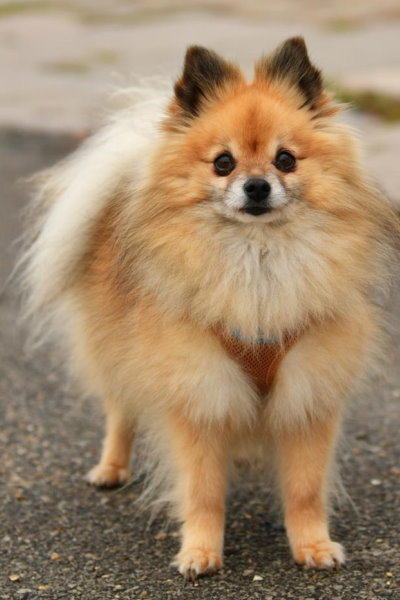

As the weather cools and rain becomes more frequent across many parts of Australia, an often-overlooked danger begins to appear in our gardens, parks, and backyards — mushrooms and other fungi.
Many dog owners are unaware that some mushrooms can be extremely toxic and potentially fatal if eaten. Unfortunately, Pomeranians are naturally curious little dogs. They investigate everything with their noses and sometimes their mouths, making them particularly vulnerable to accidental poisoning.
At this time of year, we encourage all Pomeranian owners to take a few moments to regularly inspect their yards and outdoor areas.
Why Winter Increases the Risk
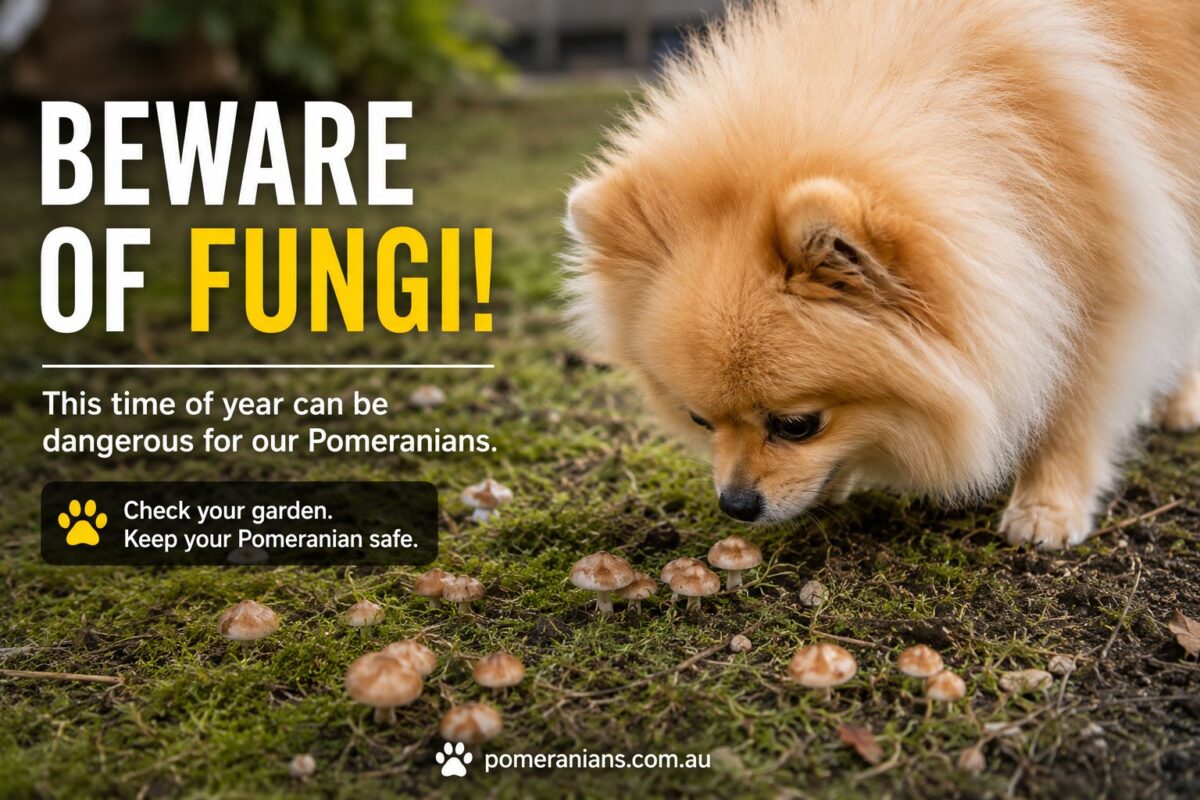
Mushrooms thrive in cool, damp conditions. Following rain, fungi can appear literally overnight in lawns, garden beds, mulch, compost heaps, under trees, and even in pots.
Many toxic mushrooms look harmless. Some resemble common edible varieties while others may simply appear as small brown, white, or cream-coloured growths emerging from the soil.
The problem is that it is almost impossible for the average person to identify whether a mushroom is safe or dangerous.
Even experienced mushroom enthusiasts can struggle to distinguish toxic species from harmless ones.
The safest approach is simple:
Assume every mushroom is potentially poisonous and remove it immediately.
Why Pomeranians Are Particularly at Risk
Pomeranians are intelligent, inquisitive little dogs.
They love exploring their environment and investigating new smells. Puppies are especially likely to pick up unfamiliar objects and taste them.
Unlike larger breeds, Pomeranians require only a tiny amount of a toxic substance before becoming seriously ill.
A mushroom that causes mild illness in a large dog could potentially have far more severe consequences for a dog weighing only two to four kilograms.
This makes vigilance especially important for owners of toy breeds.
Where Mushrooms Commonly Appear
Many owners are surprised to discover mushrooms growing in areas they consider safe.
Check carefully around:
• Garden beds
• Lawn areas
• Bark and mulch
• Compost piles
• Under shrubs
• Around tree roots
• Pot plants
• Damp corners of the yard
• Leaf litter
• Parks and walking tracks
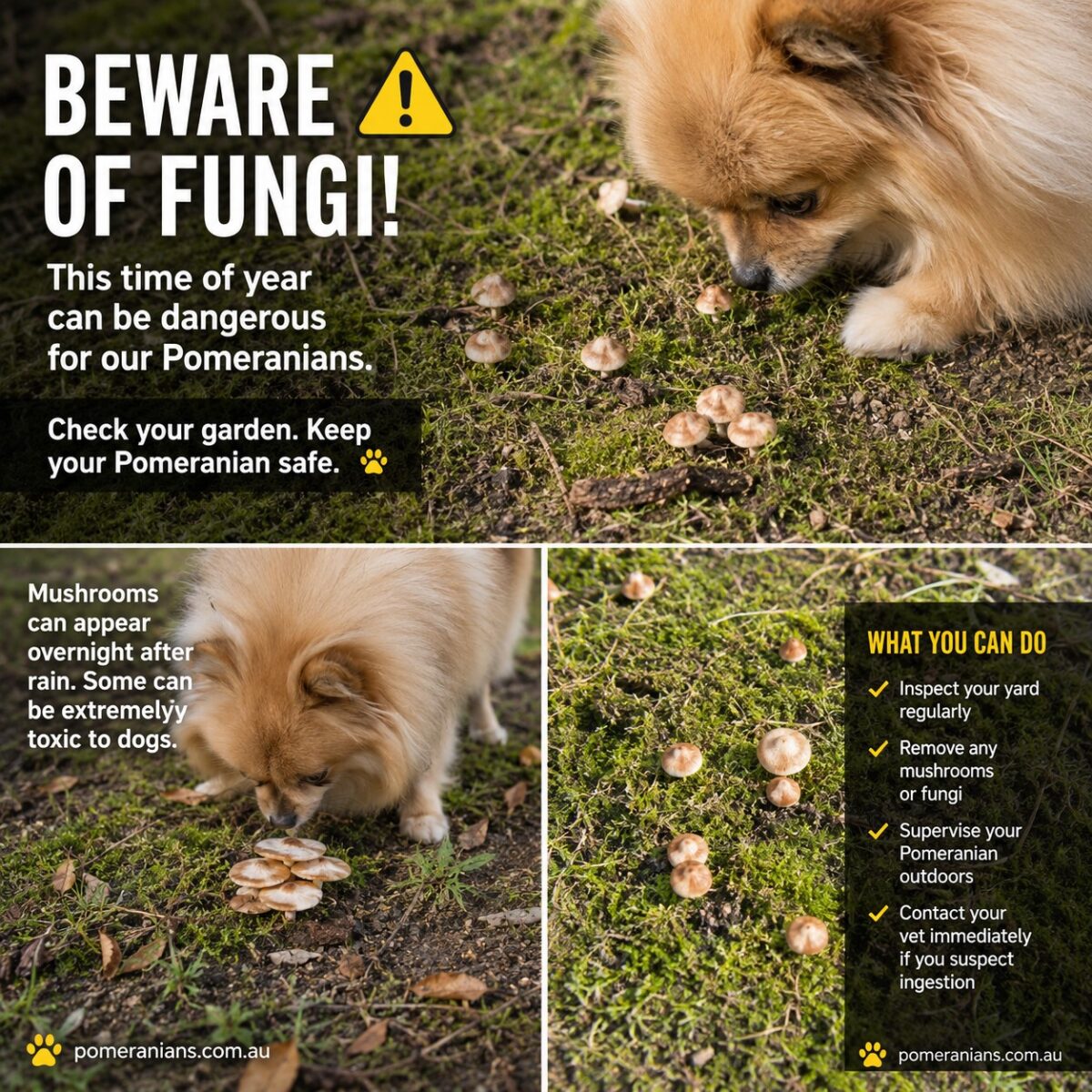
Remember that mushrooms may appear overnight after rain, meaning an area that was clear yesterday may contain fungi today.
Signs of Mushroom Poisoning
The symptoms depend on the type of mushroom consumed.
Some mushrooms cause stomach upset while others attack the liver, kidneys, or nervous system.
Possible signs include:
• Vomiting
• Diarrhoea
• Excessive drooling
• Loss of appetite
• Lethargy
• Abdominal pain
• Tremors
• Unsteadiness
• Seizures
• Collapse
• Yellowing of the eyes or gums
• Coma
Some symptoms may appear within minutes, while others may take several hours to develop.
One of the most dangerous mistakes owners make is assuming their dog is fine because symptoms have not appeared immediately.
Certain toxic mushrooms can cause delayed but severe organ damage.
What To Do If Your Pomeranian Eats a Mushroom
If you suspect your dog has eaten any mushrooms, treat it as a veterinary emergency.
Do not wait for symptoms to appear.
Contact your veterinarian immediately or the nearest emergency veterinary hospital.
If possible:
• Take photographs of the mushroom
• Collect a sample using gloves
• Note where it was found
• Record approximately how much may have been eaten
However, do not waste valuable time searching for the mushroom if your dog requires urgent medical attention.
Early treatment can dramatically improve the outcome.
Prevention Is Always Better Than Treatment
The good news is that most mushroom poisonings can be prevented.
A few simple precautions can greatly reduce the risk.
Inspect Your Yard Regularly
During autumn and winter, walk around your property every few days.
Check for newly emerged mushrooms, particularly after rain.
Remove Mushrooms Promptly
Wear gloves and remove any fungi as soon as they are discovered.
Dispose of them securely so pets cannot access them.
Supervise Outdoor Time
Keep an eye on your dog while they are outside.
This is especially important for puppies and young dogs that are still exploring the world.
Be Careful During Walks
Mushrooms are not confined to home gardens.
They frequently appear in parks, reserves, nature strips, and walking tracks.
Pay attention to what your dog is sniffing or attempting to eat.
Teach a Reliable “Leave It” Command
One of the most valuable training exercises any dog can learn is “leave it.
A reliable response can prevent a dog from picking up dangerous objects, including mushrooms.
Other Seasonal Hazards to Watch For
Mushrooms are not the only winter danger.
At this time of year, owners should also be aware of:
• Snail and slug baits
• Compost and decaying organic matter
• Toxic plants
• Rodent poisons
• Mouldy food scraps
• Standing water contaminated with bacteria
Small dogs can be affected by even tiny quantities of these substances.
A Final Reminder
Most Pomeranians live long, happy lives without ever encountering a toxic mushroom. However, every year, veterinary clinics treat dogs that have become seriously ill after consuming garden fungi.
Because mushrooms can appear so quickly and often go unnoticed, regular yard inspections are one of the simplest safety measures owners can take during the cooler months.
Our Pomeranians trust us to keep them safe. A quick walk around the garden after the rain could make all the difference.
Please share this post to help raise awareness and protect Pomeranians and other dogs throughout Australia this winter.
Stay safe, and give your Poms an extra cuddle from all of us at Pomeranians Australia.
Copyright Pomeranians Australia. All Rights Reserved.
References and Further Reading:
[1] Official Standard of the Pomeranian (AKC). American Kennel Club, 2011.
[2] English Kennel Club Pomeranian Breed Standard, 2017.
[3] Denise Leo, The Pomeranian Handbook.
[4] Milo G. Denlinger, “The Complete Pomeranian.”
[5] Kimbering Pomeranians “1891-1991”.
[6] William Taplin’s “The Sportsman’s Cabinet.”
[7] E. Parker “The Popular Pomeranian.”
[8] Lilla Ives “Show Pomeranians.”