As Australian summer approaches, many Pomeranian owners wonder whether a shorter coat would help their dog feel more comfortable. Should you shave a Pomeranian in summer, or could that summer haircut create problems of its own?
For routine summer grooming, I do not recommend shaving a Pomeranian’s double coat. Light tidying is different from clipping the body short. A shaved Pomeranian may experience slow, uneven or incomplete coat regrowth, although individual outcomes vary. Clipping may sometimes be necessary for veterinary treatment or severe matting that cannot be removed comfortably.
I’m Denise Leo, an ANKC Pomeranian specialist judge, author and preservation breeder. I have bred and exhibited Pomeranians under the Dochlaggie prefix since 1975, with over 100 champions. My approach to summer grooming focuses on maintaining a clean, manageable coat while putting the dog’s comfort first.
In this guide, I’ll explain what happens if you shave a Pomeranian, the difference between sensible trimming and close clipping, and how to approach coat care during Australian summers. We’ll also look at when professional help is appropriate and what to ask your groomer before agreeing to a haircut.
Quick Answer: Should You Shave a Pomeranian in Summer?
No—a healthy Pomeranian should not normally be shaved simply because the weather is hot. Light coat tidying is different from shaving or clipping the body short. After close clipping, coat regrowth may be slow, uneven or incomplete.
For Australian summer care, focus on:
- Gentle brushing and combing to remove loose undercoat and prevent mats.
- Appropriate bathing and thorough, careful drying.
- Cool surroundings, shade and fresh drinking water.
- Walks during cooler conditions, avoiding hot surfaces.
When might clipping be necessary? A veterinarian or experienced groomer may recommend it for medical treatment or severe, painful matting. Your dog’s comfort takes priority.
Denise Leo’s advice: Maintain the natural double coat wherever practical. A well-groomed coat does not make a Pomeranian immune to overheating, so summer comfort requires more than a haircut.
Can You Shave a Pomeranian? Understanding the Double Coat
A Pomeranian can physically be shaved, but that does not mean close clipping is the right choice for routine grooming. Before deciding on a summer haircut, it helps to understand the coat you would be removing.
Pomeranians have a double coat, made up of two distinct layers:
- The undercoat: Shorter, softer, dense hair that provides insulation.
- The outer coat: Longer guard hairs that help protect the skin and give the breed its characteristic outline.
When you look at a fluffy Pomeranian, you are seeing these layers working together. Maintaining the coat involves reaching beneath the outer hair to remove loosened undercoat and prevent tangles.
Removing Loose Undercoat Is Different From Shaving
Brushing out hair that has naturally loosened is different from cutting healthy hair short. Gentle line brushing and combing help keep the coat manageable while preserving its natural structure.
A quick brush over the surface may leave tangled undercoat underneath. This is why a Pomeranian can look tidy but still have knots behind the ears, under the front legs or around the trousers.
The grooming goal is to maintain a comfortable, separated coat—not remove as much hair as possible.
Light Trimming Is Different From a Shaved Pomeranian
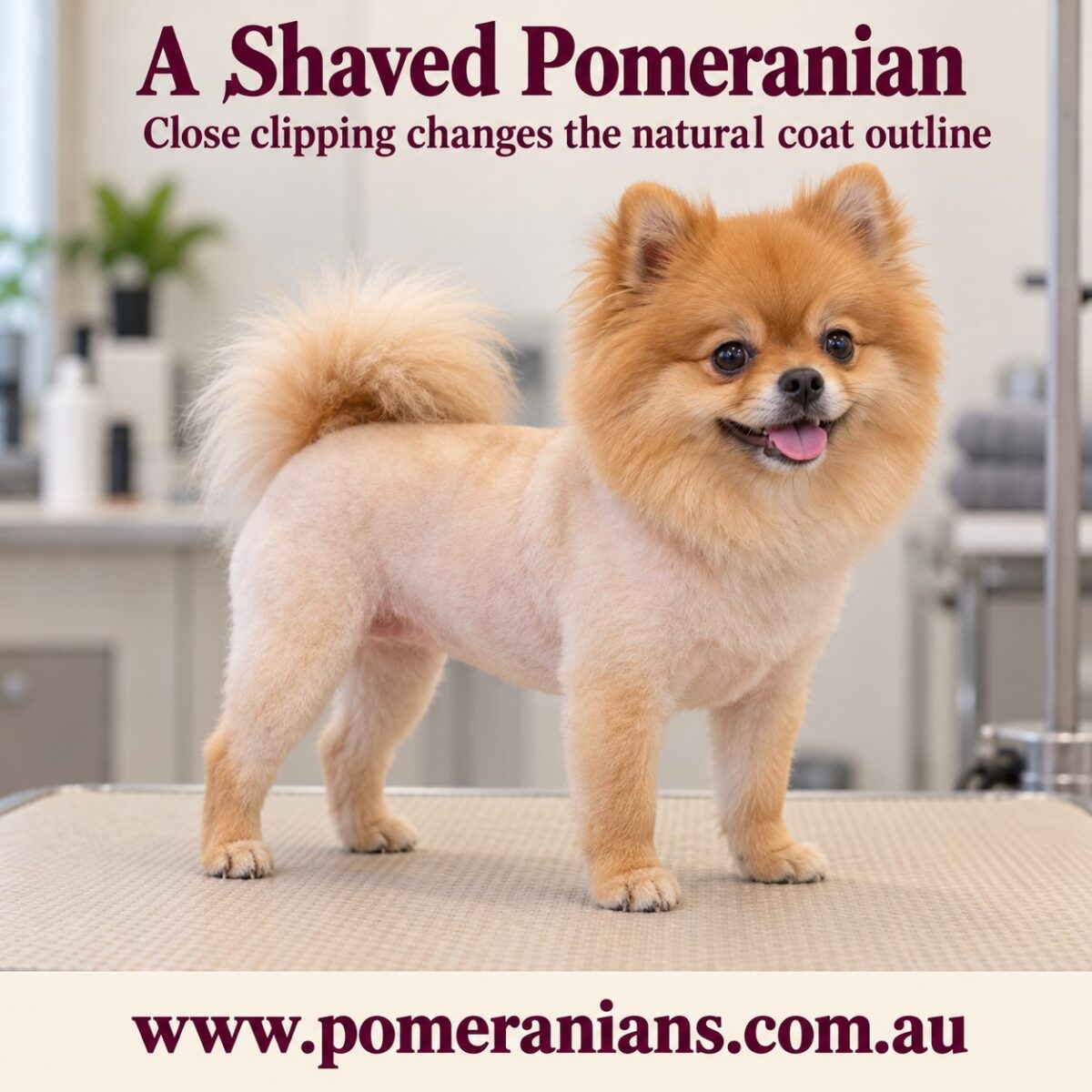
Light scissor tidying around the feet, ears and outline does not create the same result as clipping the body close to the skin.
Terms such as “summer cut” or “teddy bear cut” can mean different things to different groomers. Before an appointment, ask exactly how much hair will be removed and whether clippers will be used on the body.
My recommendation is to explain clearly: “Please maintain my Pomeranian’s natural double coat and discuss any significant shortening with me first.”
If the coat is severely matted, the groomer may need to recommend a different approach. That decision should reflect your dog’s comfort and skin condition, rather than a hairstyle alone.
Before Taking Your Pomeranian to a Groomer
Discuss the grooming plan before the appointment begins. Do not assume that “a tidy-up,” “a summer cut” or “a teddy bear trim” means the same thing to every groomer.
Ask exactly how your groomer intends to groom your dog:
- Will the body coat be scissor-trimmed or clipped short?
- How much coat will be removed?
- Which areas need tidying?
- What will happen if they discover mats?
- Will they contact you before changing the agreed plan?
Take a photograph of a groomed Pomeranian whose finish you like. A picture gives the groomer a clearer reference than a hairstyle name alone. However, your dog’s coat texture, length and condition will influence what can reasonably be achieved.
Do Not Expect a Groomer to Detangle a Severely Matted Coat
A severely matted coat cannot always be brushed out comfortably. Expecting a groomer to spend hours pulling apart tight mats simply to preserve the hair can be cruel to the dog.
Your Pomeranian’s comfort must come before keeping a long coat. Where mats are dense, widespread or tight against the skin, professional clipping may be the kindest option. Sore or damaged skin may also need veterinary attention.
My advice against routine summer shaving should never be used as a reason to insist on painful detangling. Removing severe mats is a different situation from shaving a healthy, maintained coat for appearance.
Once the coat is manageable again, ask your groomer to demonstrate the brushing and combing needed between appointments. Regular home maintenance helps prevent your Pomeranian from facing the same uncomfortable situation again.
How to Keep Your Pomeranian Comfortable in an Australian Summer
If shaving is not the usual answer, what should you do instead? Focus on regular coat maintenance and reducing your dog’s exposure to hot conditions.
Remove Loose Coat With Gentle Brushing
Work through the coat in small sections using line brushing, then check gently with a metal comb. Pay particular attention behind the ears, under the front legs, around the trousers and beneath the harness.
Remove hair that has naturally loosened without repeatedly brushing the same area. The aim is to prevent tangles and maintain the coat—not strip out healthy hair.
If you discover tight or painful mats, arrange professional help rather than forcing a brush through them.
Bathe When Needed and Dry Thoroughly
Choose bathing frequency according to your Pomeranian’s cleanliness, skin and coat condition. Summer does not automatically mean your dog needs constant bathing.
After washing, rinse thoroughly and dry through the double coat using controlled airflow at a comfortable temperature. Keep the dryer moving and check your dog regularly. Avoid turning grooming into a long, hot session in an already warm room.
Provide a Cool Place to Rest
Give your Pomeranian access to a cool indoor area during hot weather. A shaded garden may still become uncomfortably hot, so check the actual conditions where your dog is resting.
Keep fresh drinking water readily available. Your Pom should be able to move away from sunshine and choose a comfortable resting place.
Never leave your Pomeranian in a parked car, even briefly.
Choose Walk Times According to the Conditions
Early morning or later evening may offer cooler walking conditions, but check the temperature and ground surface rather than relying on the clock.
Shorten or skip a walk when conditions are unsuitable. Quiet indoor play and simple training activities can provide entertainment without a hot outdoor outing.
Watch your individual dog: puppies, seniors and Pomeranians with health problems may need extra adjustments.
Check Harnesses and Clothing
A harness can create friction where it touches the coat. Check these areas after walks and remove the harness when safely indoors if it is no longer needed.
Avoid unnecessary clothing in warm conditions. If your dog needs a garment for a medical reason, ask your veterinarian how to balance that need with comfort in the heat.
Good summer care combines a maintained coat with sensible surroundings and routines. A haircut alone cannot provide that.
Can You Shave a Pomeranian Puppy?
I do not recommend shaving a Pomeranian puppy simply to make grooming easier, reduce shedding or create a particular hairstyle. Early grooming should focus on cleanliness, gentle handling and maintaining the developing coat.
The Puppy Uglies Are Not a Reason to Shave
As a puppy’s baby coat gives way to the adult coat, the appearance can change considerably. Your Pom may look less fluffy, with more noticeable ears, longer-looking legs and an uneven coat.
Owners sometimes consider shaving during this stage to “start again” or encourage thicker growth. Shaving is not a reliable way to make a puppy’s adult coat grow thicker or faster.
Instead, gently remove loosened puppy hair and prevent it from tangling around the developing adult coat. Avoid repeatedly brushing thin areas in an attempt to stimulate growth.
Make the First Groom About Confidence
A puppy’s first grooming appointments should help build comfortable associations with handling, brushes, the grooming table and dryer noise.
Ask for a gentle introduction and discuss any necessary tidying beforehand. Take a photograph showing the natural Pomeranian finish you prefer, while recognising that a puppy will not yet have an adult dog’s coat.
Light tidying of the feet or sanitary area may be appropriate. A short body clip for appearance is a different decision and should not be assumed to be part of a puppy groom.
What If a Puppy Is Already Severely Matted?
The same welfare principle applies to puppies as to adults: do not insist on painful detangling to preserve the coat.
An experienced groomer or veterinarian should assess severe matting and decide how to remove it comfortably. Afterwards, ask for a manageable home routine and a demonstration of brushing and combing.
If a puppy has inflamed skin, sores, persistent itching or unexplained bald patches, seek veterinary advice rather than assuming the changes are ordinary puppy uglies.
My Pomeranian Has Already Been Shaved—What Should I Do?
If your Pomeranian has already been clipped short, focus on comfortable care and monitoring the coat as it grows. There is no need to assume the coat is permanently damaged, but regrowth can vary between dogs.
Find Out Why the Coat Was Clipped
Ask your groomer which areas were shortened and whether matting or skin concerns influenced the decision. If clipping was necessary to remove painful mats, discuss how to prevent them returning.
If the haircut was shorter than you expected, explain the finish you want for future appointments. Photographs and an agreed grooming plan can help prevent misunderstandings.
Groom Gently as the Hair Returns
A short coat still needs regular checks. Look for tangles as the hair lengthens, particularly behind the ears, under the legs and around equipment.
Use gentle brushing suited to the coat’s current condition. Do not repeatedly brush bare or thin areas to try to encourage growth. Avoid another close clip for appearance while you are assessing recovery.
Protect Exposed Skin
Provide comfortable indoor surroundings and avoid unnecessary sun exposure. Check whether harness straps rub areas that previously had more coat covering them.
Ask your veterinarian about suitable protection if large areas of skin are exposed. Do not apply human sunscreen, oils or hair-growth products without checking that they are appropriate for your dog.
Be Cautious About Hair-Growth Promises
No shampoo, supplement or grooming treatment can guarantee that a shaved Pomeranian’s coat will return to its previous appearance.
Feed an appropriate complete and balanced diet, maintain gentle coat care and seek advice before adding supplements. More brushing or extra vitamins are not substitutes for investigating a coat problem.
Record Changes and Seek Help When Needed
Take occasional photographs in similar lighting so you can compare the coat over time. Note the clipping date and any changes in skin colour, comfort or hair coverage.
Arrange a veterinary examination for itching, redness, sores, spreading hair loss or prolonged poor regrowth. Your veterinarian can assess whether the changes relate to clipping, another condition or a combination of factors.
Patient maintenance and appropriate assessment are more useful than repeatedly trying new remedies.
Learn to Maintain Your Pomeranian’s Coat Between Grooming Visits
Regular home maintenance helps prevent the tangles that can turn a routine grooming appointment into a difficult mat-removal session. If you are unsure how to reach the undercoat or check your brushing, ask your groomer to demonstrate on your own dog.
For more detailed guidance, my revised and expanded Pomeranian Grooming ebook brings together techniques and photographs from more than 50 years of breeding and exhibiting Pomeranians.
Inside, you will find guidance on:
- Line brushing and checking the coat with a comb.
- Bathing preparation, rinsing and thorough drying.
- Preventing mats and recognising when professional help is needed.
- Nail care, foot tidying and coat trimming.
- Introducing puppies to grooming.
- Adapting grooming for senior Pomeranians.
The 86-page illustrated PDF includes an expanded matting chapter and a clickable table of contents, making it easy to return to the guidance you need.
My aim is to help you maintain your Pom’s natural coat with greater confidence and make grooming a more comfortable part of everyday care.
Explore the Pomeranian Grooming ebook by Denise Leo.
Frequently Asked Questions About Shaving Pomeranians
Should you shave a Pomeranian in summer?
A healthy Pomeranian should not normally be shaved simply because the weather is hot. Maintain the coat with gentle brushing, appropriate bathing and thorough drying, alongside cool surroundings, shade and drinking water. Clipping may be necessary for medical treatment or severe matting.
Can Pomeranians be shaved if they are severely matted?
Yes. When mats are dense, painful or tight against the skin, professional clipping may be the kindest option. Do not expect a groomer to spend hours pulling apart a severely matted coat to preserve its length. Your dog’s comfort comes first.
Will a shaved Pomeranian’s hair grow back?
Some Pomeranians regain their usual coat, while others experience slow, uneven or incomplete regrowth. No fixed recovery time applies to every dog. Persistent poor regrowth or changes in the skin should be assessed by a veterinarian.
Is a teddy bear cut the same as shaving?
Not necessarily. Groomers may use the term for different finishes, ranging from light scissor shaping to substantial shortening. Ask exactly what will be removed and whether the body will be clipped short. Take a photograph of the finish you prefer and agree on the plan beforehand.
Does shaving a Pomeranian stop shedding?
Shaving cuts the hair shorter; it does not stop the coat’s natural shedding cycle. Regular brushing and combing help remove loosened hair and prevent it from becoming trapped in tangles.
Can you shave a Pomeranian puppy?
Routine body shaving is not recommended for appearance or to manage the puppy uglies. Focus on gentle handling, removing loosened puppy coat and preventing tangles. Severe matting or medical needs require an individual professional assessment.
How do you shave a Pomeranian safely?
If clipping is necessary, have an experienced groomer or veterinarian assess the coat and skin first. Do not attempt to shave tight mats at home or cut them out with scissors. Explain your dog’s health and handling needs before work begins.
Why is my Pomeranian without hair even though it has not been shaved?
Shaving is not the only possible explanation for hair loss. Normal coat changes and several health conditions can affect coat coverage. Unexplained bald patches, persistent thinning, itching or skin changes need veterinary assessment rather than a diagnosis based on appearance.
What should I tell my groomer before a summer appointment?
Explain that you want the natural double coat maintained, show a reference photograph and ask how much hair will be removed. Agree that the groomer will contact you before substantially changing the plan, particularly if mats are discovered.
Final Thoughts
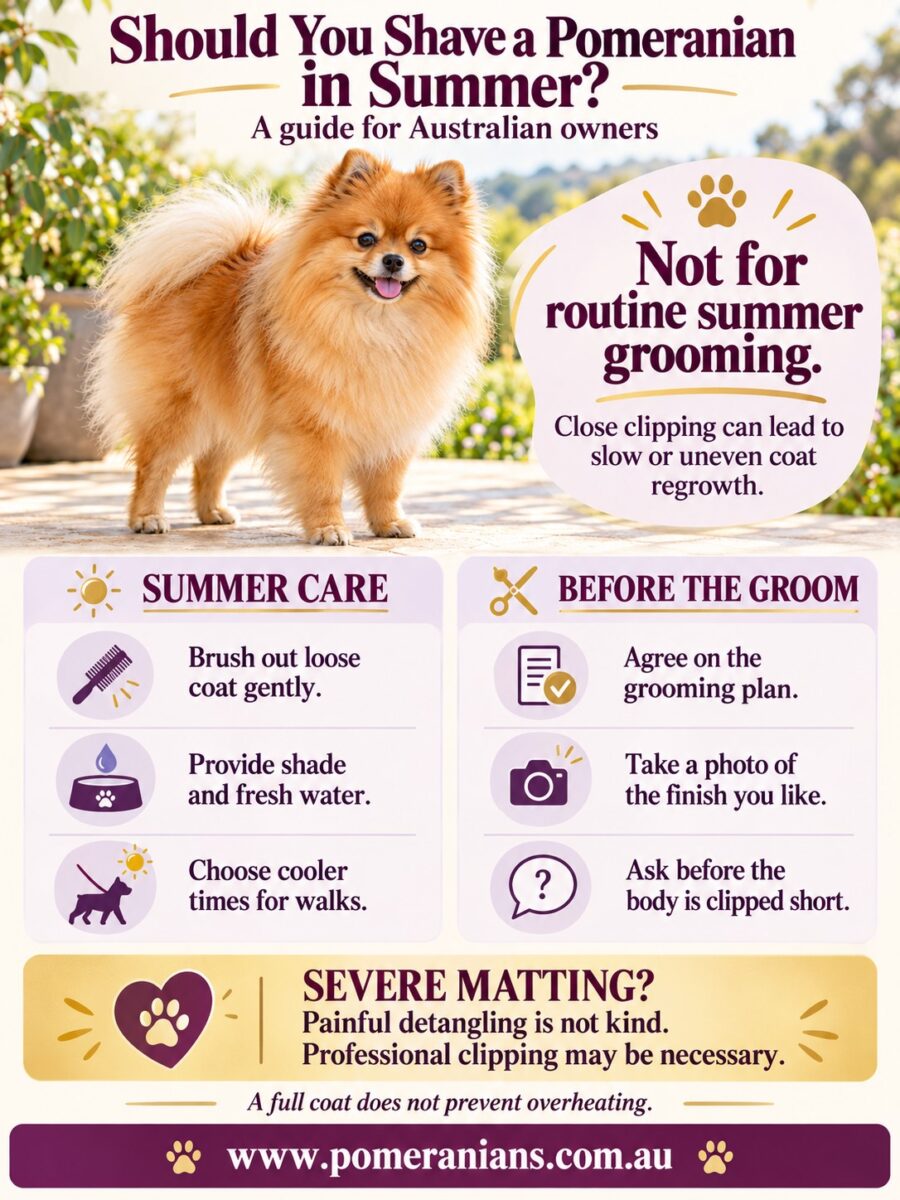
Keeping your Pomeranian comfortable during an Australian summer means regular coat care, cool surroundings and sensible routines—not automatically shaving the coat. Discuss the grooming plan beforehand and take a photograph of the finish you prefer.
If severe matting makes detangling painful, professional clipping may be the kindest choice. Your Pomeranian’s comfort should always come before preserving coat length.
Copyright Pomeranians Australia. All Rights Reserved.
References and Further Reading:
[1] Official Standard of the Pomeranian (AKC). American Kennel Club, 2011.
[2] English Kennel Club Pomeranian Breed Standard, 2017.
[3] Denise Leo, The Pomeranian Handbook.
[4] Milo G. Denlinger, “The Complete Pomeranian.”
[5] Kimbering Pomeranians “1891-1991”.
[6] William Taplin’s “The Sportsman’s Cabinet.”
[7] E. Parker “The Popular Pomeranian.”
[8] Lilla Ives “Show Pomeranians.”