Learn how fake white Pomeranian puppy scams work, how coat colours change, and how to avoid being misled when buying a Pomeranian in Australia.
Many people fall in love with the idea of a snow-white Pomeranian puppy — the adorable, fluffy pup that looks pure white in photos. Unfortunately, a large portion of the advertising you’ll see online for “white pomeranian puppies” is misleading at best and outright scam at worst.
Most of these advertised puppies are not true white Pomeranian puppies, and many sellers use this tactic to entice unsuspecting buyers into paying for something they don’t realize they’re getting.
True white pomeranian puppies — pups that retain a pure ice-white coat into adulthood — are a rare and specific colour outcome, not as common as many buyers are led to believe. Unscrupulous sellers often use photos of very light-coloured pups, or even images stolen from reputable breeders, to create listings that appear genuine.
The problem is compounded because Pomeranian coats change a lot as the puppy grows. A pup that appears white at a few weeks old may turn cream, pale orange, or parti colour by the time they reach adult coat at 4–8 months of age. This natural coat change can make it nearly impossible to guarantee adult colour early on, yet many scams use this uncertainty to mislead buyers.
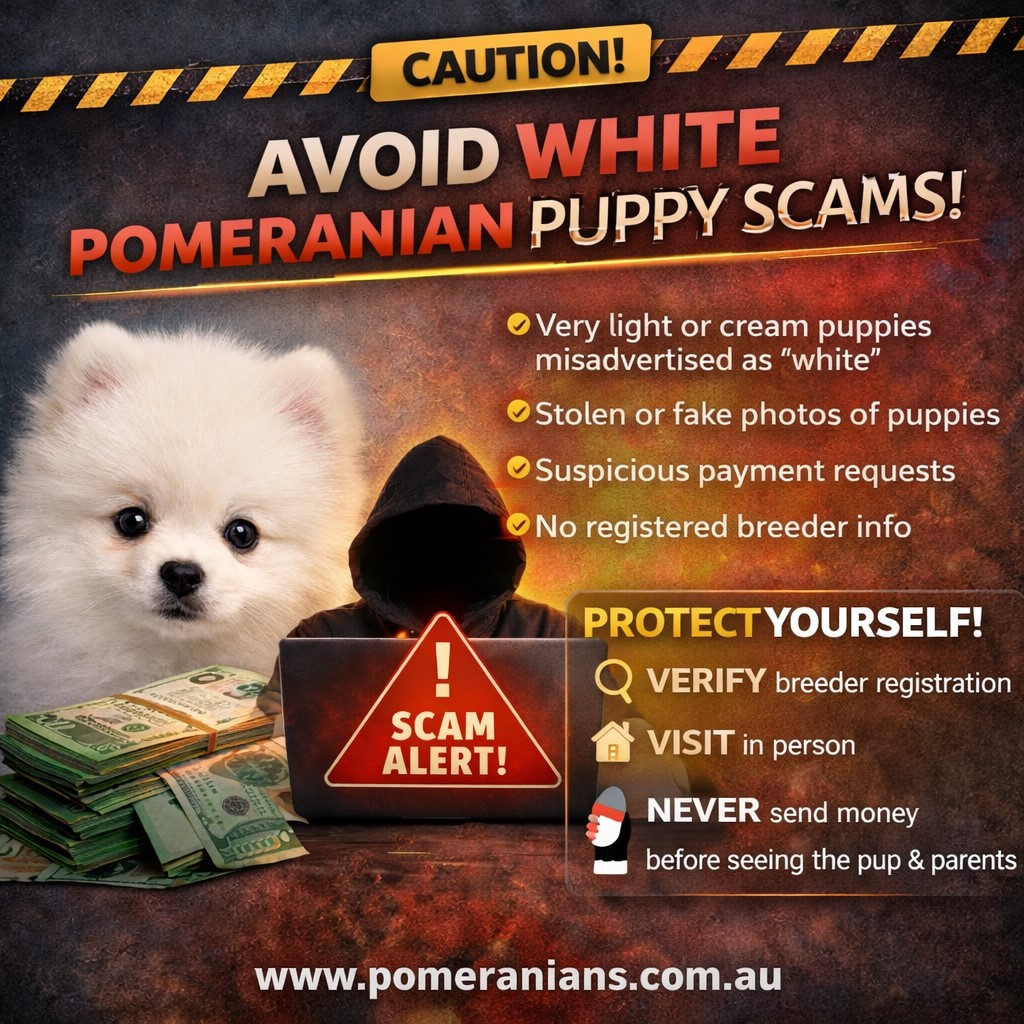
In this article, we will explore:
- How Pomeranian puppy colours change as they grow
- Why “white puppy” photos can be misleading
- What common scam tactics look like
- Questions you should ask before you pay any money
- How to protect yourself from scams
- Why buying from registered, reputable breeders matters
By the end of this piece, you’ll be far better equipped to spot red flags, make informed choices, and avoid wasting time and money on a puppy that isn’t what you expected.
Coat Colours and Why Early Photos Can Be Misleading
Pomeranian puppy coats go through a dramatic transformation as they develop from baby fluff into their adult coat. This means that a puppy that appears completely white at 6–8 weeks of age can end up with a very different adult colour.
There are a few reasons for this:
- Many light-coloured puppies start life with pale coats that appear white, but they carry cream, orange, or parti in their genetic makeup.
- As the puppy reaches the adult coat stage (usually between 4–8 months), deeper pigments can appear, sometimes resulting in cream, orange, sable, or parti patterns in what once looked like a white pup.
- Very faint shading behind the ears or on the hocks often indicates that the adult colour will be different from pure white.
This colour change is completely normal for Pomeranians and not a reflection of any health or well-being issue — but it is crucial for buyers seeking a genuine white Pomeranian.
Many scam listings exploit this natural coat change. They will show a picture of a young, very light-coloured puppy and advertise them as “white pomeranian.” Buyers who are not familiar with the Pomeranian coat development may assume the dog will stay white, only to be surprised later when the adult colour turns cream, orange, or parti.
Common Scam Tactics and Red Flags to Watch For
Online scams involving pomeranian puppies often follow predictable patterns. Knowing these red flags can save you from serious disappointment, financial loss, and emotional distress.
Listings With Only Puppy Photos and No Adult Examples,
one of the most common signs of a scam is a seller who only shows baby puppy photos — no adults of the same colour. Purebred breeders will usually show photos of older dogs so buyers can see what their puppies are likely to look like as adults.
If a seller can’t or won’t show you adult dogs (especially adults of the claimed colour), consider that a warning sign.
Photos Taken From Other Websites
Unscrupulous sellers sometimes take photos from other breeders’ sites or social media posts to make their listings look legitimate. They may even remove breeder watermarks or add simple graphics to obscure the original source.
If you see images that look highly polished, appear elsewhere online, or show suspicious edits, question their authenticity.
Overly Cheap Prices
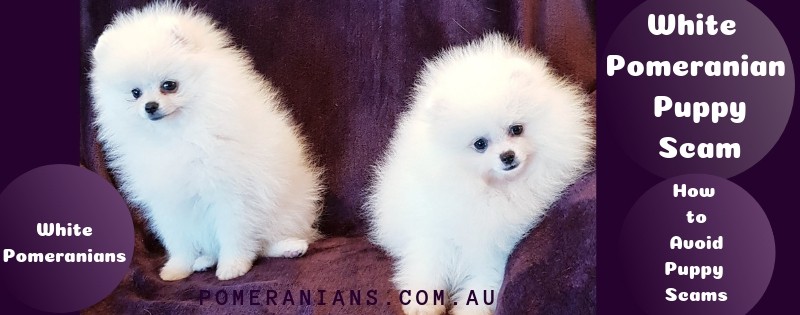
Puppy scams often lure buyers with prices that seem too good to be true. While everyone wants a great deal, purebred Pomeranian puppies — especially rare colours like white — don’t tend to be cheap. If a deal seems unbelievably affordable, it often is.
Requests for Unusual Payment Methods
Scammers frequently ask for payment via wire transfer, direct deposit, or other non-refundable options before you have visited the puppy or met the breeder. They may also ask for deposits before the puppy is even born. This is a huge red flag.
Legitimate breeders typically don’t take deposits on unborn puppies, and reputable sellers will not insist on payment methods that make refunds impossible.
Excuses for Not Allowing Visits
A classic scam tactic is to offer reasons why you mustn’t see the puppy in person. for example:
- “The puppy is far away.”
- “Shipping will happen soon.”
- “We can’t meet in person.n”
These are often signs that somebody is trying to avoid scrutiny.
Real breeders will usually welcome visits or video calls so you can see the puppy with its parents and in its environment.
Inconsistent Answers and Dodgy Contact Details
Scammers often have weak or inconsistent responses when you ask specific questions. they may avoid giving:
- Real breeder addresses
- Registration or kennel club numbers
- Vet contact details
- Clear photos of parents
How to Protect Yourself Before You Pay Any Money
Protecting yourself from Pomeranian puppy scams involves doing due diligence and asking the right questions before you hand over any funds. Here’s a practical checklist to use:
Ask to see the parents and adult dogs
A true breeder can and will show you adult dogs of the same colour as the puppy you’re interested in. That way, you can see how pups from those lines typically mature.
Verify registration details
Ask for the Kennel Club registration and check those details independently. if the breeder refuses to share or gives vague information, that’s a warning sign. registered breeders focus on pedigree documentation and health credentials, not just photos.
Insist on a video call or in-person visit
This allows you to see where the puppies are raised and to meet the litter and parents before any payment. Reputable breeders expect this and encourage it.
Use safe payment methods
Don’t send money via untraceable payment requests before you’re confident about the breeder’s legitimacy. If a seller pressures you for quick payment, take a step back.
Check References
Ask the breeder for references from previous buyers, and reach out to them. Genuine breeders often have satisfied owners who can share their experiences.
Do your own online research
Copy and paste photos from the listing into image search tools. If you find the same images on other breeder sites, that’s a red flag.
The Importance of Buying from Reputable, Registered Breeders
There’s a big difference between buying a puppy from a registered, ethical breeder and falling into the trap of an internet scammer.
Registered breeders focus on:
- Preserving breed standards
- Health testing and genetic screening
- Socialising puppies properly with people and other animals
- Providing clear paperwork and registration
- Offering health guarantees
These breeders rarely use pet marketplace sites full of unverified sellers. instead, they typically work through breed clubs, word-of-mouth referrals, and waiting lists.
Pomeranian clubs and associations often maintain breeder directories, and these are valuable resources for serious buyers. reputable breeders aren’t looking to make a quick sale — they want to see their puppies go to loving, prepared homes. They care about the breed’s future, not just the transaction.
Additional Precautions When Buying Online
Even when buying through a platform that seems reputable, exercise caution:
- Watch out for copycat websites designed to look official
- Research the domain age and legitimacy of the site
- Check if the breeder owns the photos and content, or if they appear stolen
- Ask for multiple angles and dates for puppy photos to ensure they are recent
Remember: if it feels rushed, suspicious, or too good to be true, pause and verify.
What To Do If You Suspect a Scam
If you think you’ve encountered a scam listing:
- Do not send any more money
- Gather screenshots and records of correspondence
- Report the listing to the platform where it was posted
- Contact your bank/payment provider to ask about reversing any charges
- Report the matter to the local consumer protection authorities
In Australia, agencies that handle scam reporting and consumer protection can sometimes help if a significant amount is involved. It may also help prevent others from becoming victims.
Closing Summary
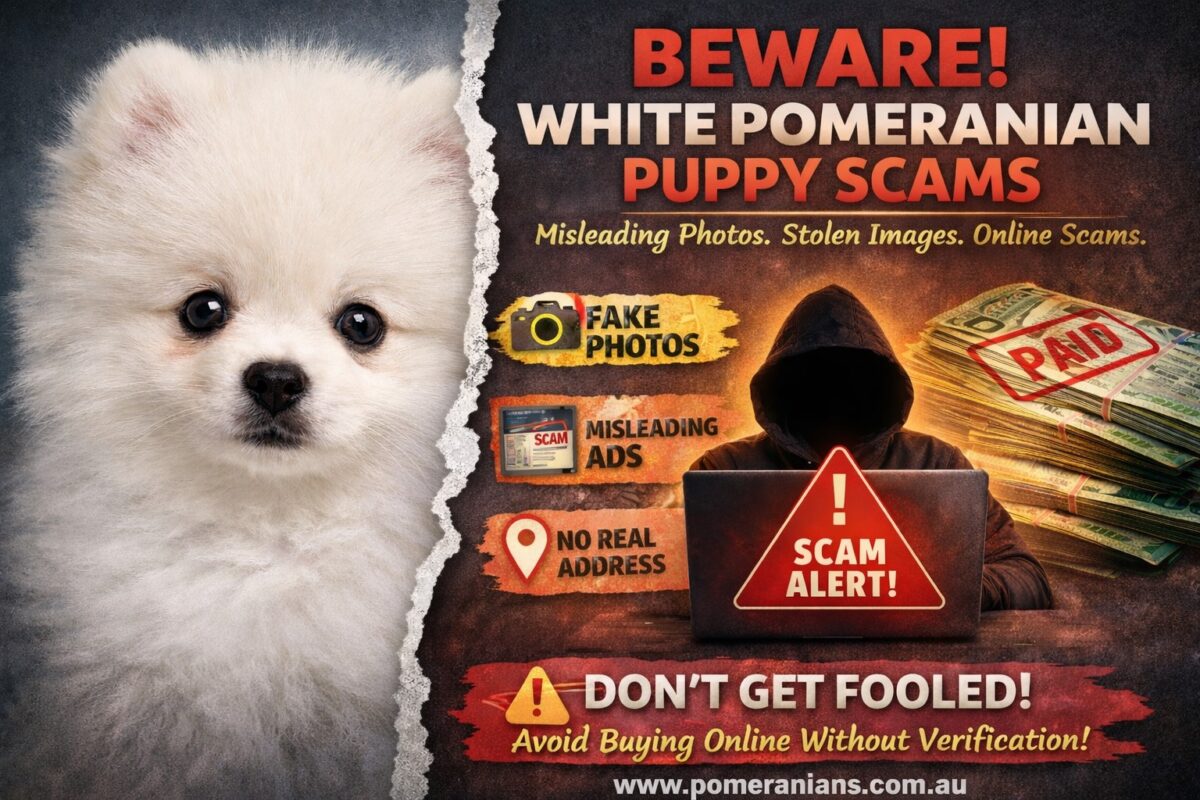
White pomeranian puppies are beautiful and sought after, but the internet is full of listings that misrepresent colour, use stolen images, or outright defraud buyers. Understanding how Pomeranian coats change, what legitimate breeders do, and the common red flags of scams can save you time, money, and heartbreak.
◆ Always ask to see adult dogs and verified registration details.
◆ Never rush into payment without seeing the puppy in person or on video.
◆ Work with reputable, registered breeders and use breed club directories when possible.
Your dream of a white pomeranian can be real — just make sure you’re prepared, informed, and protected against common scams.
Copyright Pomeranians Australia. All Rights Reserved.
References and Further Reading
[1] Denise Leo, “The Pomeranian Handbook”.
The Pomeranian Handbook
( Printed and shipped in Australia).