Discover the truth about White Pomeranians—genetics, grooming, colour differences, show acceptance and care tips—expert advice from Denise Leo at Pomeranians Australia.
The White Pomeranian is one of the most striking and eye-catching colours in the breed. With their pure snowy coats, bright expressions, and elegant presence, these beautiful Pomeranians have become highly sought after across Australia and around the world. However, true white Pomeranians are rarer than many people realise, and their history, genetics, and care requirements are often misunderstood.
This page provides clear, expert-backed information to help you understand what makes a true White Pomeranian, how their coat colour develops, what to expect as they mature, and how to properly care for and maintain their stunning white coat. Whether you’re an owner, prospective buyer, or simply a Pomeranian enthusiast, this guide offers everything you need to appreciate and care for this stunning variation of the breed.
What is a White Pomeranian?
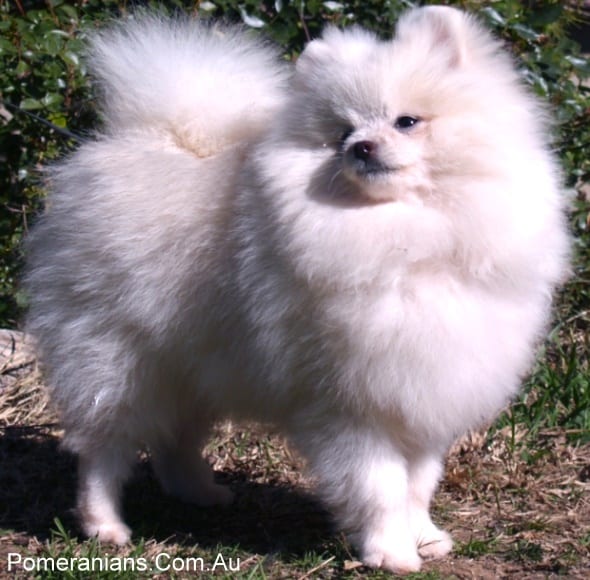
An all-white Pomeranian should be a solid white colour with no lemon or cream shading. The guard hairs and the undercoat are also white. White Pom dog eye colour must be very dark, if not black.
Adult white Pomeranian dogs must have black points, i.e., black eye rims, a black nose, black lips, and black pads.
Newborn white baby Pomeranians are ice white with all pink points. By the age of six weeks, these points should have darkened to black; however, the coat will remain snow white.

There Are 2 Types of White Pomeranians
Pomeranian owners and Pom breeders need to understand that there are actually two different types of white Poms. White Pomeranian dogs bred from parti colours will always be a parti Pomeranian, even if you can’t see the parti patches as they’re so small and the dog appears to be a Pomeranian white dog in appearance.
The other type of white Pomeranian dog is actually really an extremely pale cream Pomeranian. This important Pomeranian fact makes the task for white Pomeranian breeders very difficult.
White Pomeranian Genetics Explained: The Two Types of White Pomeranians
White Pomeranians are one of the most misunderstood colour varieties in the breed. Although their appearance may seem simple—pure, clean, snow-white—the genetics behind achieving a true white coat are surprisingly complex. Not all “white” puppies will mature into true whites, and many dogs advertised as white are actually cream, or parti-coloured Pomeranians.
A true White Pomeranian can only come from two distinct genetic pathways, and understanding the difference helps breeders, judges, and puppy buyers accurately identify coat colour and quality.
Type 1: Genetically True Whites (Recessive White)
These Pomeranians are born pure white and remain white throughout their entire lives. They do not develop cream shading, biscuit patches, or any form of colour bleed as they mature.
How True Whites Are Produced
True whites typically come from lines where white-to-white or white-to-true-cream breedings occur consistently. These matings strengthen the recessive white gene and help maintain solid white coats through generations.
Important Note About Pigment Loss
When breeders use repeated white-to-white pairings, lines can gradually lose pigment.
This may show as:
- Fading nose pigment
- Light or washed-out eye rims
- Weak paw pad pigmentation
To protect the correct black pigment, breeders must periodically reintroduce colour into the line.
Recommended Pigment-Restoring Colours
To maintain rich, black, correct pigmentation:
- Cream
- Wolf sable
- Black
These colours help reinforce strong pigment without compromising the whiteness of future generations.
How They Differ from Cream
Although cream Pomeranians can appear very pale, true whites have no warm or yellow undertones in the coat. Cream dogs often show shading:
- Behind the ears
- Along the spine
- On the hocks or tail base
- In a puppy coat that darkens slightly as they mature
True whites do not develop this warmth—they stay crisp and pure.
Signs of a True Recessive White Puppy:
- Born stark white (no biscuit shading)
- Pigment visible early (black noses, black eye rims)
- Coat remains pure, even after the puppy coat is shed
- No cream tint even under bright sunlight
What to Check in the Pedigree:
True whites typically come from lines where white-to-white or white-to-true-cream breeding occurs consistently.
Red flag:
If the pedigree includes orange, parti, or orange-sable lines, the puppy may lighten to a cream color.
What to Look For in DNA if Available
Some breeders use colour panels:
- E-locus testing for e/e
- S-locus to confirm no parti spotting
- No dominant colour genes (E, K) that would override white
Type 2: Extreme Parti Whites
This type of white Pomeranian is genetically a parti-coloured dog (S-locus) with so much white patterning that the dog appears completely white.
Genetic Mechanism
These dogs are not genetically true white, even though their coat looks white. Instead, they are:
- Homozygous for extreme white spotting
- Body coat: almost entirely white
- Hidden colour: may be present as very faint cream or pale biscuit (especially on the ears or tail)
How They Differ from True Whites
Extreme white parti dogs may show:
- Slight cream tint behind the ears
- Off-white shading
- Small patches of colour appearing after coat change
- Pigmentation that may be less intense (sometimes lighter nose pigment)
True recessive whites do not show these traits.
What to Look For in The Pedigree:
If the parents or grandparents include:
- Parti
- Mismark
- White Irish patterns
- Excessive white spotting lines
…the puppy is likely a white parti, not a genetically true white.
DNA testing
Testing can confirm whether the dog carries parti spotting:
- S-locus.
- True recessive whites will be solid, not parti carriers.
Red flag:
If a “white” Pomeranian tests S-locus positive for parti, it is not a true white.
Will A White Pomeranian Puppy Stay White?
Cream, Orange, and White Parti Colors and Light Orange, very young Pomeranian puppies are frequently erroneously described as white baby Pomeranians. Always look at the hair at the back of the pup’s ears. Is there any color other than snow white? If there are light orange or biscuit shadings behind the pup’s ears, the dog might be parti coloured, cream, or even an orange Pom dog.
Biscuit or cream hair behind the pup’s ears usually means the white baby Pomeranian will turn out a cream or a very light orange Pomeranian, not an ice white Pomeranian. Small light biscuit patches on the pup’s coat may indicate the Pomeranian white puppy is a parti colored Pomeranian and won’t be an adult white Pomeranian.
It can be difficult to determine the full-grown white Pomeranian colour of an all-white baby Pomeranian until after the coat change at around 6 months. Always purchase your puppy from a reputable Pomeranian breeder. If buying a white Pomeranian puppy, request written assurance that the puppy will be this color as an adult.
Is an all White Pomeranian Dog a Rarity?
Are white Pomeranians rare? Yes, true ice white Pomeranians can be considered rare.
White Pomeranian Puppies Price
How much is a pure white Pomeranian, and how much are white Pomeranian puppies? The white Pomeranian price is usually more expensive than that of an orange Pomeranian puppy of the same age and quality. Owing to the simple fact of supply and demand for baby white Pomeranian puppies, the white Pomeranian cost can often be double that of a standard coloured Pomeranian.
The most common Pomeranian scam involves advertising white Pomeranian puppies for sale, usually a white female Pomeranian puppy, which does not exist.
Of all the Pomeranian colours, white seems to be the most sought after by people looking for a beautiful pet. Breeders receive many enquiries for white Pom puppies.
I receive many emails each day asking if I have a white Pomeranian puppy or all-white Pomeranian puppies for sale. Other queries include asking if I have white toy Pomeranian puppies, white mini Pomeranian pups, or white miniature Pomeranian dogs available.
The reality is that all Pomeranians are classed as toy dogs, as they are shown in the toy group at shows together with other toy-sized dogs. The actual terms white micro teacup Pomeranian, toy, and miniature Pom are simply sales gimmicks to trap the naive.
People searching for a white baby Pomeranian puppy also need information on the price of white Pomeranian puppies.
Where Can I Buy a Fluffy White Pomeranian Puppy?
The most common Pomeranian scam involves advertising white Pomeranian puppies for sale, usually a white female Pomeranian puppy, which does not exist.
Puppy buyers looking for a white Pomeranian puppy should contact a reputable Pomeranian breeder.
Grooming Requirements For An All White Pomeranian Dog
Caring for a White Pomeranian’s coat requires a little extra time and attention compared to darker colours. While all Pomeranians need regular brushing and proper coat maintenance, a snow-white coat shows stains, dirt, and discolouration far more easily. With the right grooming routine and products, your white Pom can stay sparkling, bright, and beautifully maintained.
Whitening & Brightening Shampoos
White coats often benefit from specialised shampoos that help remove dullness and enhance brightness.
Recommended product types:
- Optical brightening shampoos (lifts yellow tones and brightens coat)
- Purple/blue shampoos (counteract warm or brassy tones)
- Clarifying shampoos (remove product buildup and environmental staining)
- Whitening conditioners (add shine while preventing dryness)
Grooming frequency:
- Bath every 2–4 weeks, depending on lifestyle
- Use whitening formulas only occasionally to avoid drying out the coat
Always choose products that are safe for double coats and free from harsh bleaching agents.
Managing Tear Stains
Tear staining is one of the most common issues in White Pomeranians. These rusty-coloured marks form under the eyes and can make the coat look discoloured.
Causes of tear staining:
- Excessive tearing (common in small brachycephalic breeds)
- Blocked tear ducts
- Allergies
- Teething in puppies
- Environmental factors: wind, dust, perfume sprays
- Diet sensitivity
How to reduce tear staining:
- Wipe under the eyes daily using a gentle tear-stain remover or warm water
- Keep facial hair trimmed and clean
- Avoid plastic food bowls (they harbour bacteria)
- Keep water clean and fresh daily
- Consult a vet if tearing is excessive or sudden
Tip: Staining is more noticeable on white coats, so consistent care is essential.
Preventing Yellowing & Staining on the Body Coat
White coats are prone to:
- Grass stains
- Urine discolouration on the belly and legs
- Dirt and dust build-up
- Food staining around the mouth
- Rust-coloured saliva staining
How to prevent it:
- Trim belly hair and inner thighs to reduce contact with urine
- Keep feet, bib, and legs clean with gentle between-bath wipes
- Use a pin brush and comb daily to remove debris before it settles
- Apply a coat-protective spray before walks
- Feed high-quality food to reduce excessive saliva staining
Maintaining Coat Texture & Fluff in White Poms
Whitening shampoos can strip moisture if overused, so balancing hydration is important.
Keep the coat healthy with:
- A moisturising conditioner or leave-in spray
- Regular brushing to distribute natural oils
- Occasional deep-conditioning treatments
- Avoiding over-bathing to maintain natural coat integrity
A well-conditioned coat stays fuller, brighter, and easier to maintain.
Sun Protection for White Pomeranians
White coats and pale skin may be more sensitive to sun exposure.
Tips:
- Limit direct sunlight during peak UV hours
- Use dog-safe sunscreen on exposed areas (e.g., nose, ears if sparsely pigmented)
- Avoid outdoor grooming sessions in strong sunlight, which can yellow the coat
White Coat Grooming Routine (Quick Summary)
💜 White Pomeranian Grooming Tips
White Pomeranians need a little extra grooming care to keep their coats bright, clean, and free from stains.
- Use whitening or brightening shampoos sparingly to avoid dryness.
- Wipe the face and eyes daily to prevent tear staining.
- Brush the coat every day to remove dust and debris before it stains.
- Trim belly and inner thighs to reduce urine discolouration.
- Use coat-protective sprays before outdoor play to keep the coat white.
Health Concerns for the White Pomeranian Dog
White poms are prone to the same health issues as other Pomeranians and have a similar lifespan.
One health issue related to many white dogs, regardless of breed, is deafness. As a white Pomeranian breeder for many decades, I have not encountered a deaf white Pomeranian. On the other hand, I have heard of deaf Pomeranians in a variety of colours.
You should purchase your puppy from a show breeder who conducts health testing and proves their poms in the show ring before breeding. Ask your breeder to have the hearing of a Pomeranian white puppy checked before purchase.
Breeding White Pomeranians
If your interest is breeding snow white Poms and you enjoy a good challenge, then the white Pomeranian is for you.
Many breeders have attempted to breed show-quality small white Pomeranian dogs. The only really successful white breeders have concentrated solely on the white Pom. Numerous breeders have tried and quickly given up on this challenge over the years.
White-to-white breedings can quickly produce problems, including Poms whose quality has reverted to the old style or original Pomeranian type, loss of pigmentation, a lack of head and leg coat, poor coat quality, and more.
A study of old pedigrees will reveal past white breeders who gave up on breeding the ice white Pom and used their white bitches to better advantage in an orange breeding program.
My Recommendations Related to White Pom Color Breeding Programs
Based on my personal experience over many decades breeding white Pomeranians, I recommend the following:
When mating for Pomeranian puppies, white, the ideal pairings are: pure white Pomeranian with white; white with black (as long as the black has white close in its pedigree; white with cream; white with parti (preferably black parti, i.e, a Pomeranian black and white); and white with wolf sable or a cream sable.
White Pomeranian Colour Breeding Don’ts
I don’t suggest you breed a white pom with a chocolate sable or a chocolate Pomeranian. Also, do not breed a white Pomeranian with an orange Pomeranian if possible. Never mate an adult white Pomeranian with a beaver pom dog.
History of The Pomeranian White Dog
Early Pomeranian dogs were mostly white. Unfortunately, these dogs were also rather larger than desired and more German Spitz-type in appearance than the modern-day Pomeranian. These larger white dogs had longer, narrower muzzles, lower-set tails, flat open coats, bigger ears, and were often longer-backed than the breed standard demanded.
Orange, sable, blue, and chocolate Poms made their appearance in the Pomeranian dog world, and breeders of these older-style white Poms attempted to breed their dogs down in size by outcrossing with newer-coloured dogs. The resulting progeny was usually parti coloured or wolf-sable in colour.
Those white Pomeranian breeders who attempted to breed the whites down in size faced problems with pigmentation, coat texture, and retention of the ice-white coat colour. Many of the dogs had problems with lemon shading and tippings to their coats. Even today, breeders attempting to breed ice-white Pomeranians of show quality face tremendous hurdles.
White is One of the Original Pomeranian Colours
The original Pomeranian colours were White, Black, and Cream, with occasional parti colours. It was not until Queen Victoria visited Italy and brought back different coloured Poms that other coloured dogs appeared in the breed.
The first champion of the breed was a white Pomeranian dog: Champion Rob of Rozelle. The breeder and breeding of this first Pom Champion is unknown.
The second Pomeranian Champion was another white Pomeranian dog, Champion Konig of Rozelle. Konig was the son of Champion Rob of Rozelle. The dam was Peggoty.
Bred by Miss Hamilton, who specialised in white Pomeranians. Champion Rob of Rozelle was also the sire and grandsire of many champion dogs during this era, including another white champion for breeder Miss Chell, Champion Belper Flossie.
As one of the original breed colours, this coloured Pomeranian dog has worldwide Kennel Club recognition.
White Pomeranians in the Australian Show Ring
White Pomeranians are fully accepted in Australian conformation shows and are judged to the same breed standard as every other colour variety. While oranges and orange sables remain the most commonly exhibited colours, a high-quality white Pomeranian can be every bit as competitive—provided their structure, type, and coat meet the highest expectations of the standard.
What Judges Expect in a White Pomeranian
A show-quality white Pomeranian should be:
- Pure, crisp, and snow-white with no cream shading
- Full, harsh-textured, and standing off from the body
- Clean and free from stains (particularly around the face and feet)
- Accompanied by strong black pigment—black nose, eye rims, and paw pads
Because white coats show every flaw, judges naturally scrutinise them closely. Any weakness in pigmentation, texture, or clarity becomes more noticeable.
Competing Against Oranges & Orange Sables
Although oranges and orange sable Pomeranians dominate the ring numerically, colour alone does not determine winners. Judges assess structure, movement, type, expression, coat quality, soundness, and overall balance—not colour preference.
I have personally bred and seen White Pomeranians of equal quality to the very best orange show Poms. To be competitive in the ring, white Pomeranians—just like blacks, creams, beavers, or blues—must be of exceptional quality to stand out among the oranges and orange sables.
When a white Pom is constructed correctly, moves well, and carries the correct coat and pigment, they can compete—and win—against the most successful oranges.
White Pomeranian FAQ
1. Are White Pomeranians accepted in Australian dog shows? Yes. White Pomeranians are fully accepted in Australian conformation shows under Dogs Australia (ANKC) and judged to the same breed standard as all other colours.
2. Are White Pomeranians rare? Yes, true White Pomeranians are considered rare because producing a pure snow-white coat with strong pigment requires specific genetics and selective breeding.
3. What is the difference between a true white and a pale cream Pomeranian? A true white Pom stays crisp, icy white for life, while pale creams often develop warm ivory shading as they mature. Checking behind the ears helps distinguish the two.
4. Can a white Pomeranian turn cream as it grows? Yes, if the puppy is not genetically a true white. Many pale creams appear white as babies, but later show cream shading.
5. Are White Pomeranians more expensive? Often yes. True whites are harder to breed and rarer, so prices can be higher, though reputable breeders price based on quality and health rather than colour alone.
6. Do White Pomeranians have more health problems? No. True recessive white Pomeranians are no more prone to health issues than other colours. Deafness is more associated with extreme-white parti and merle genetics, not true white.
7. Why do White Pomeranians get tear stains? Tear stains are more visible on white fur. Causes include allergies, teething, wind, or blocked ducts. Daily cleaning helps prevent staining.
8. How do I keep my White Pomeranian’s coat bright and clean? Daily face wiping, regular brushing, careful use of whitening shampoos, and trimming belly hair to prevent urine staining help keep the coat pristine.
9. Are White Pomeranians harder to groom? They require more frequent cleaning because white shows every mark, but with a consistent routine, they are manageable.
10. Do White Pomeranians do well in the show ring? Yes—if they are top quality. White Poms can compete successfully against oranges and sables when they possess excellent type, coat, structure, and movement.
11. Can White Pomeranians have black noses and dark eyes? Yes, and they should. Strong pigment—black nose, paw pads, eye rims—is essential in a true white Pom.
12. What colours help strengthen pigment in white breeding lines? Cream, wolf sable, and black are commonly used to restore and maintain strong black pigment, as repeated white-to-white breedings can weaken pigmentation.
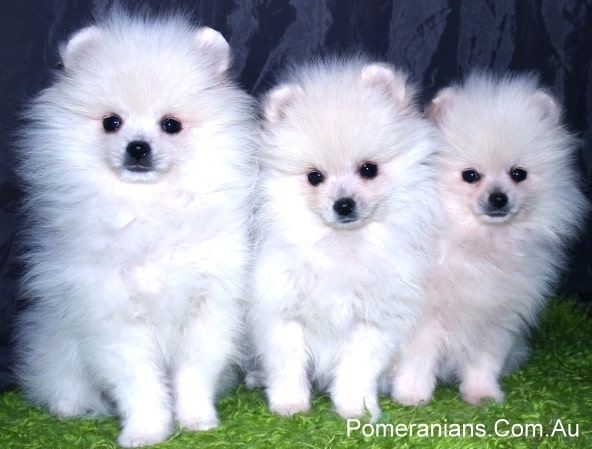
Pictures of White Pomeranian Puppies
Conclusion
The White Pomeranian is a stunning and elegant variation of the breed, admired for its snow-white coat, bright expression, and undeniable charm. While the genetics behind producing a true white Pom are complex, and the grooming demands are slightly higher, these beautiful dogs are every bit as capable, intelligent, and loving as any other colour. With correct breeding, strong pigmentation, and proper coat care, white Pomeranians can thrive as family companions and compete successfully in the show ring.
By understanding the differences between true white, cream, and parti influence—and by following the right grooming routine—you can ensure your White Pomeranian stays healthy, happy, and perfectly presented. Whether you are an owner, exhibitor, or lifelong Pom enthusiast, appreciating the unique white coat adds to the joy of owning this captivating little dog.
Copyright Pomeranians Australia. All Rights Reserved.
References and Further Reading:
[1] Official Standard of the Pomeranian (AKC). American Kennel Club, 2011.
[2] Official English Kennel Club Pomeranian Breed Standard, 2017.
[3] Kimbering Pomeranians “1891-1991”.
[4] Denise Leo, The Pomeranian Handbook.
[5] E. Parker, The Popular Pomeranian.
[6] L.Ives, Show Pomeranians.
The Pomeranian Handbook
( Printed and shipped in Australia).